

Skin Cancer Reconstruction
Surgical reconstruction after Mohs micrographic surgery or skin cancer excision on the face, ears, scalp, and neck — tailored to your anatomy, your defect, and your goals for the final result.
Skin cancer is the most common cancer in the United States, with more than five million basal cell and squamous cell carcinomas diagnosed each year. The face is the most common site of skin cancer development, due to its lifetime accumulation of ultraviolet exposure. And when cancer is treated with Mohs micrographic surgery or wide local excision on the face, scalp, ear, or neck, what remains is a surgical defect that requires thoughtful, technically skilled reconstruction.
Getting the cancer out is the essential first step. Reconstructing the defect with care and precision is what determines whether the final result looks natural, heals without distortion, and preserves the function of the surrounding structures.
Dr. June Yoo will provide timely reconstruction for post-Mohs defects when appropriate, and will work collaboratively with your referring surgeon to understand the exact anatomy of your defect. She brings a plastic surgeon's training in facial aesthetics and reconstructive technique to every case she evaluates.
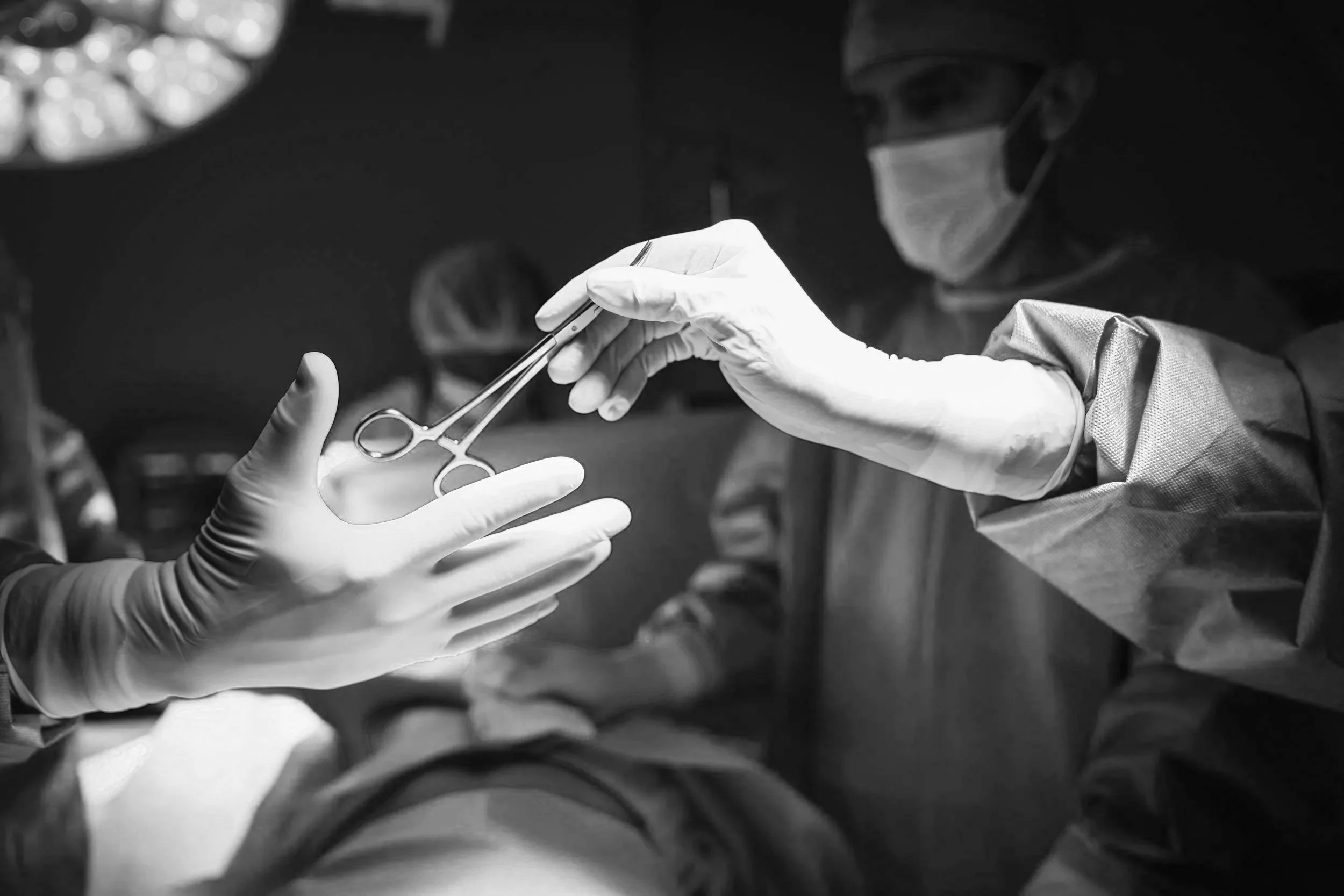
Why a Plastic Surgeon for Reconstruction?
For defects involving cosmetically sensitive or functionally critical anatomy, reconstruction by a plastic surgeon offers specific advantages:
A plastic surgeon brings training in the aesthetic subunit principles of the face, which guide how reconstruction is planned to minimize visible scarring and preserve natural facial contours. A plastic surgeon is trained in the full spectrum of reconstructive options, including complex local flaps, which may not be available in every Mohs reconstruction setting. And a plastic surgeon approaches every defect with both an aesthetic eye and a reconstructive one, treating the cancer defect as a problem to be solved as well as a face to be restored.
Dr. Yoo works in close coordination with your Mohs surgeon and dermatologic oncologist to understand the extent of the defect, the depth of tissue involvement, and the surrounding anatomy before planning the reconstruction.
Reconstruction by Anatomic Location
Different parts of the face present unique reconstructive challenges. Dr. Yoo's approach to each region reflects a combination of evidence-based technique selection and individualized surgical planning:
Nose
The nose is the most common site of facial skin cancer, accounting for approximately 25% of all facial skin cancers. It is also among the most technically demanding areas for reconstruction due to its central position, three-dimensional shape, multiple tissue layers (skin, soft tissue, cartilage, mucosa), and the critical aesthetic importance of the nasal tip, ala, columella, and dorsum.
Small nasal tip and alar defects are often managed with moving similar quality tissue into the defect. Larger defects may require a flap from your forehead. The principle of aesthetic subunit reconstruction, in which the entire affected subunit is replaced rather than patching only the defect, produces the most natural-appearing results for larger nasal resections.
Eyelids and Periorbital Region
Small defects of the upper or lower eyelid may be closed primarily. Larger defects require staged reconstruction using a combination of local flaps and grafts depending on the depth and extent of tissue loss.
Ear
The ear presents reconstruction challenges due to its complex three-dimensional cartilaginous framework. Skin defects on the auricle can often be managed with full-thickness skin grafts or local advancement flaps. Composite defects involving cartilage may require cartilage grafting and more complex staged reconstruction.
Cheek
The cheek offers abundant tissue laxity, making it one of the more forgiving areas for reconstruction. Rotation-advancement flaps utilizing the natural laxity of the lower face and neck are workhorses for moderate to large cheek defects.
Scalp
The scalp is a rigid, less mobile tissue envelope with limited distensibility, which makes local tissue rearrangement more technically demanding for large defects. Smaller scalp defects can often be closed primarily or with advancement rotation flaps. Larger defects may require tissue expansion, split-thickness skin grafting, or free tissue transfer when other options are insufficient.
Lips
The lip is a functionally critical structure, and reconstruction must preserve or restore oral competence, lip mobility, and the natural vermilion-cutaneous junction. Small lip defects can often be closed primarily with careful attention to the white roll alignment. Larger defects may require local flap reconstruction using the Abbe or Karapandzic principles for reconstruction of the lip commissure and full-thickness lip defects.


Am I a Good Candidate?
You may benefit from plastic surgical reconstruction if you:
Are scheduled for or have recently undergone Mohs micrographic surgery or surgical excision of skin cancer on the face, scalp, ear, or neck
Have a defect that is large, located in a cosmetically sensitive or functionally critical area, or involves multiple tissue layers
Are concerned about the aesthetic outcome of reconstruction and wish to have a plastic surgeon involved in your care
Were treated years ago and are living with a scar or contour deformity from prior reconstruction that you wish to address
Recovery & Results
Recovery following skin cancer reconstruction varies considerably based on the complexity of the procedure. Simple linear closures and small local flaps typically involve one to two weeks of gentle wound care and activity restriction, with the scar maturing over twelve to eighteen months. Skin grafts require careful wound care to ensure successful graft take, with dressings managed in the office over the first one to two weeks.
Staged reconstructions such as the paramedian forehead flap involve multiple procedures spaced three to four weeks apart, with the pedicle divided once the transferred tissue has established its blood supply at the recipient site.
All scars continue to mature and improve for twelve to eighteen months. Dr. Yoo provides scar care guidance including sun protection, topical therapy, and massage protocol, and monitors healing at each follow-up visit.
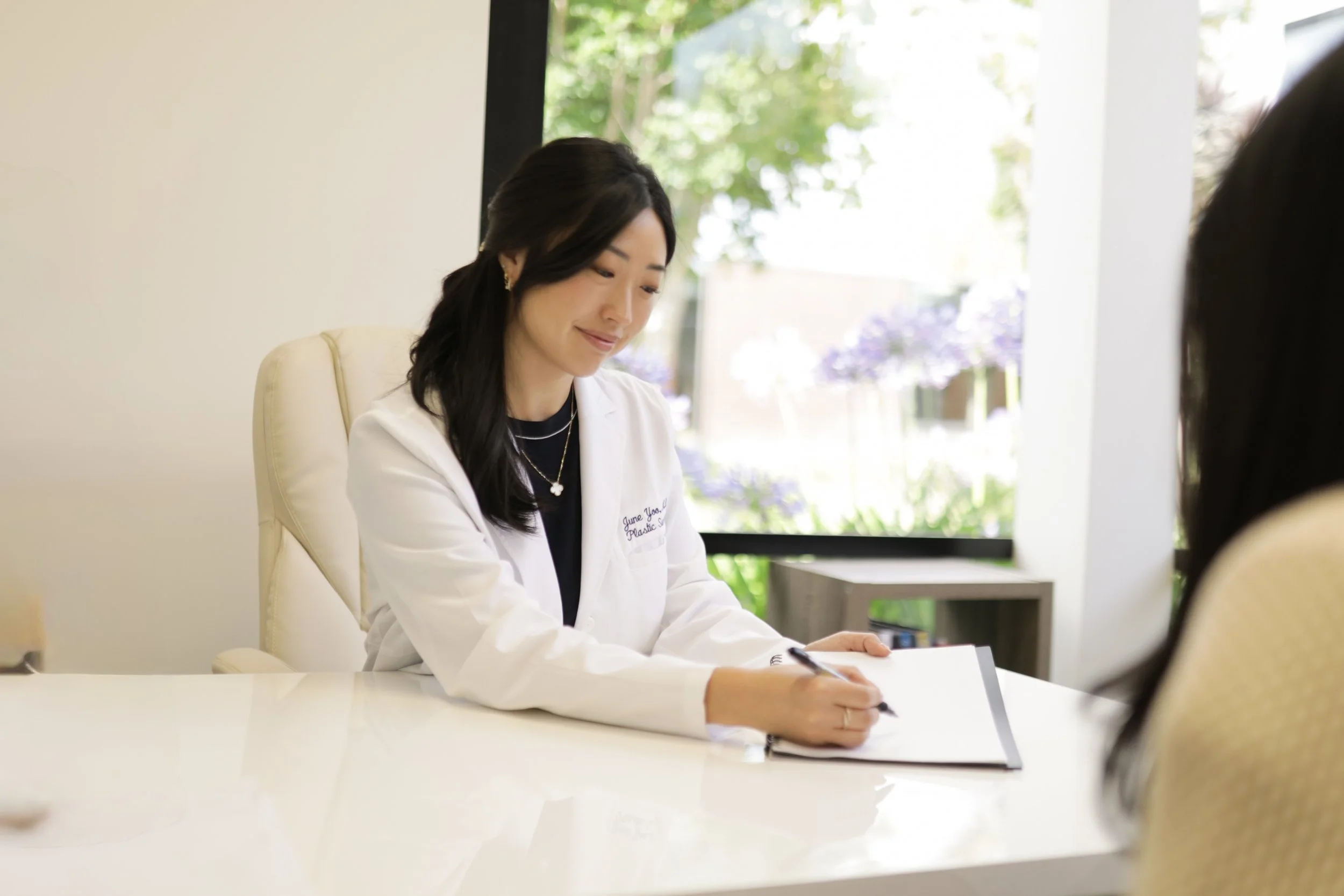
Your consultation with Dr. Yoo
Your skin cancer reconstruction consultation at June Plastic Surgery is a focused conversation about your defect, your anatomy, and your goals. Dr. Yoo will review the operative report and pathology from your Mohs surgery or excision, examine the defect or existing scar, and develop a reconstruction plan tailored to your specific anatomy and circumstances.
Key decisions you will make together include:
Reconstructive technique appropriate to the defect size, location, and depth
Timing of reconstruction relative to oncologic clearance
Staged vs. single-stage reconstruction depending on defect complexity
Coordination with your referring surgeon or oncologic team as needed
Frequently Asked Questions
-
A referral from your Mohs surgeon or dermatologist is welcome and makes coordination easier, but a self-referral is also appropriate. Our team will contact your treating surgeon to obtain the relevant surgical records and pathology before your appointment.
-
Yes, in many cases. Dr. Yoo offers same-day or next-day reconstruction for post-Mohs defects in coordination with referring Mohs surgeons. Because Mohs confirms clear margins before the patient leaves the surgical setting, reconstruction does not need to wait for pathology results.
-
All reconstruction produces a scar. The goal is a scar that is as inconspicuous as possible, located in or near natural facial creases or subunit boundaries, and well-healed through careful closure technique and postoperative scar care. Most patients are satisfied with the final scar appearance at twelve to eighteen months, when maturation is complete.
-
Mohs surgery provides the highest cure rates available for BCC and SCC, with five-year cure rates of up to 99% for primary BCC and 92 to 99% for primary SCC. Regular follow-up with your dermatologist is essential, as patients with a history of skin cancer have a meaningfully elevated risk of developing additional skin cancers. Dr. Yoo works alongside your dermatology team but does not provide ongoing skin cancer surveillance herself.
-
Yes. Post-excisional skin cancer reconstruction is a medically necessary procedure covered by most insurance plans, including Medicare. Prior authorization requirements and specific coverage vary by plan and insurer. Our team handles the authorization process on your behalf.
Clearing the Cancer is the First Step. Restoring What Was There is the Next.
Dr. June Yoo brings surgical precision, a thorough understanding of facial anatomy, and a commitment to natural outcomes to every procedure she performs. If you or your patient needs reconstructive care following skin cancer treatment, we welcome the opportunity to be part of your team.