

Breast Lift (Mastopexy)
Surgical repositioning of the breast tailored to your degree of ptosis, your anatomy, and your vision of a natural result.
Pregnancy, breastfeeding, significant weight loss, and the natural passage of time can all change the shape, position, and firmness of the breasts — even when volume remains relatively unchanged. When the breast tissue descends and the nipple falls below where it once sat, no amount of exercise or supportive undergarments can restore what has been lost.
A breast lift, formally known as mastopexy, repositions the nipple-areolar complex to a higher, more youthful location on the chest, removes excess skin, and reshapes the breast mound into a firmer, more rounded contour. The result is a breast that looks and feels more like it did before the changes of life altered its position.
Dr. June Yoo approaches every mastopexy with careful attention to anatomy, a thorough assessment of the degree of ptosis, and an honest conversation about what is achievable. Technique selection is individualized to your specific anatomy and your goals.
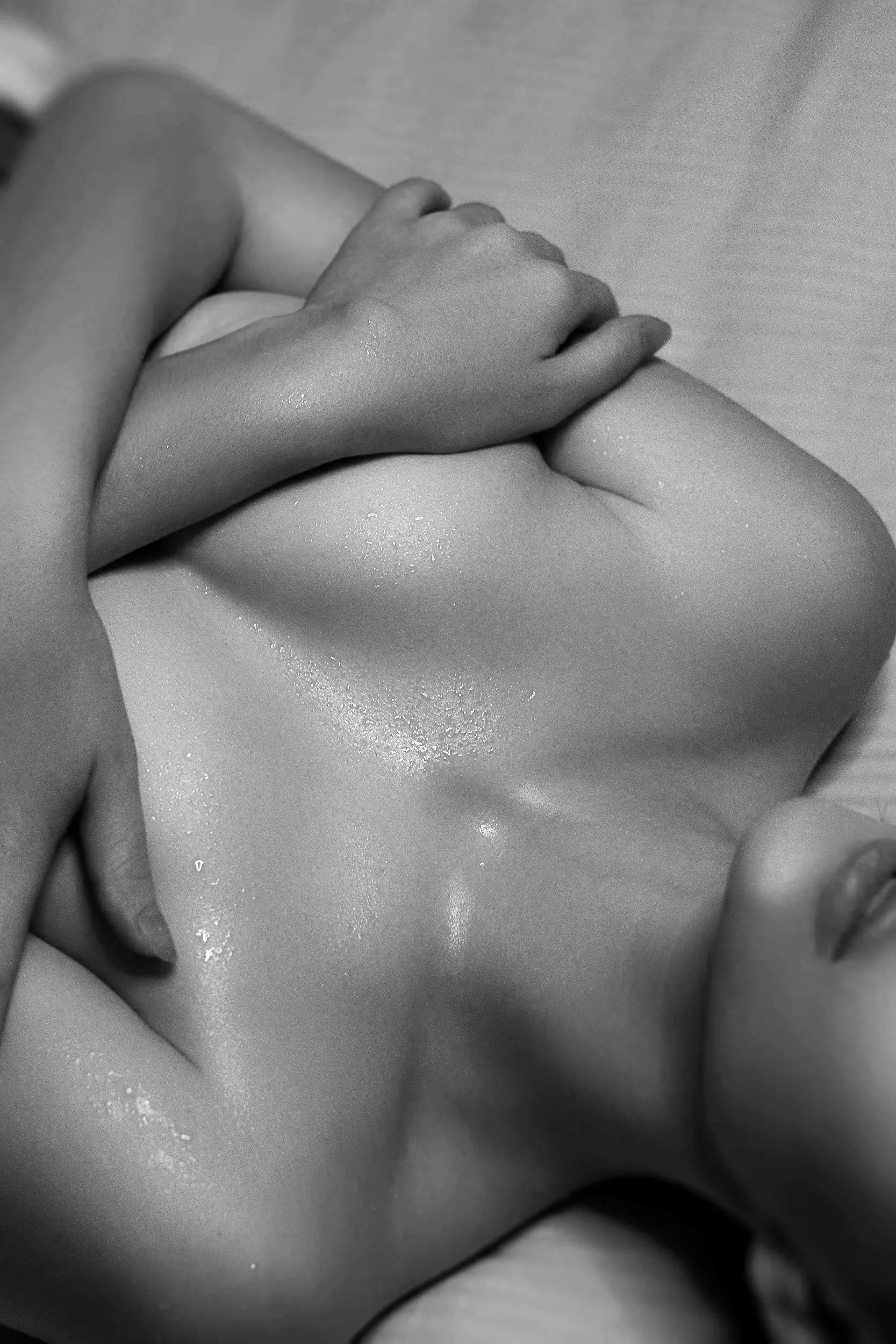
Mastopexy is a surgical procedure that corrects breast ptosis — the descent of the nipple-areolar complex and breast tissue relative to the inframammary fold (the crease beneath the breast). It does not significantly change breast volume. If you wish to be larger as well as lifted, an implant can be placed at the same time, a procedure known as augmentation mastopexy. If you wish to be smaller as well as lifted, breast reduction with mastopexy techniques may be more appropriate.
A mastopexy repositions the nipple-areolar complex to a higher location on the breast mound, removes excess lower pole skin, and reshapes the breast for improved projection and contour. The nipple-areolar complex is moved as a pedicle, meaning it remains attached to the underlying breast tissue throughout — preserving its blood supply and, to the greatest extent possible, sensation and the potential for future breastfeeding.
What is Mastopexy?
Understanding Breast Ptosis
Pseudoptosis refers to descent of the breast tissue with the nipple sitting at or above the inframammary fold. The nipple itself has not fallen, but the lower pole of the breast has lost volume or descended. This may respond to augmentation alone or to limited mastopexy techniques.
Grade I (Mild Ptosis) is defined by the nipple sitting at the level of the inframammary fold, with some loss of lower pole fullness.
Grade II (Moderate Ptosis) describes the nipple positioned below the inframammary fold but still above the most projecting point of the breast.
Grade III (Severe Ptosis) is defined by the nipple falling below the inframammary fold and pointing downward, at the most dependent portion of the breast.
Understanding your degree of ptosis helps Dr. Yoo select the technique that will give you the most proportional, lasting correction while keeping scarring appropriate to the magnitude of the problem being addressed.
Am I a Good Candidate?
You may be a good candidate for mastopexy if you:
Have noticed your breasts sitting lower on your chest than they once did
Find that your nipples point downward or fall at or below the breast crease
Have lost breast shape and projection following pregnancy, breastfeeding, or weight loss
Have maintained a relatively stable weight and are close to your long-term goal
Are in good overall health and a non-smoker, or willing to stop smoking well before surgery
Are not planning future pregnancies (pregnancy after mastopexy can re-stretch the skin and alter results)
Have realistic expectations for a natural, proportional improvement rather than a dramatic transformation
Mastopexy does not significantly increase or decrease breast volume. Patients who also wish to be larger should discuss augmentation mastopexy; patients who also wish to reduce size should discuss reduction mammaplasty.
Recovery & Results
Mastopexy is performed as an outpatient procedure under general anesthesia. Most patients are comfortable returning to light activity within one to two weeks and to desk work around the same time. Strenuous activity and heavy lifting should be avoided for four to six weeks. A supportive post-surgical bra is worn for several weeks following surgery to support healing and optimize shape.
Swelling is expected in the early postoperative period and can make the breasts appear higher and firmer than their final position. Over the course of three to six months, the breast settles into its long-term shape and position. Scars will be pink and firm initially, softening and fading significantly over twelve to eighteen months with proper scar care and sun protection.
Results from mastopexy are long-lasting, though it is important to understand that the aging process, gravity, and lifestyle factors continue to act on the breasts over time. Patients who maintain a stable weight and avoid significant fluctuations tend to enjoy the most durable outcomes.

Your consultation with Dr. Yoo
At your consultation, Dr. Yoo will assess your degree of ptosis, evaluate your skin quality and breast volume, review your goals for shape and size, and discuss the technique options most appropriate for your anatomy. She will be transparent about what each approach can and cannot achieve, and about the scar trade-offs involved at each level of correction.
Key decisions you'll make together include:
Degree of ptosis and appropriate technique
Whether augmentation mastopexy is appropriate and if so, whether simultaneous or staged
Nipple-areolar complex size — reduction of an enlarged areola is commonly incorporated at the time of mastopexy
Target shape and projection relative to your frame and lifestyle
Frequently Asked Questions
-
Mastopexy is primarily a reshaping and repositioning procedure, not a volume-changing one. A small amount of skin and glandular tissue is removed, but the change in size is minimal.
-
In pedicle-based mastopexy, the ductal connections between the nipple and the breast tissue are preserved to the greatest extent possible. Many patients are able to breastfeed after mastopexy, though there is no guarantee. If future breastfeeding is an important consideration, this will be part of your technique selection discussion with Dr. Yoo.
-
Mastopexy produces long-lasting results, but the natural aging process continues. Skin elasticity, gravity, and factors such as significant weight change or future pregnancy will all influence how the result evolves over time.
-
Scar location and length depend on the technique used. All mastopexy techniques leave a permanent scar around the areola; and a vertical technique will add a vertical and potentially horizontal component. Scars are placed within anatomic boundaries, heal within natural skin transitions, and typically fade significantly over one to two years.
-
Cost varies based on technique complexity, whether augmentation is included, anesthesia, and facility fees. A personalized estimate will be provided following your consultation. Financing options are available.
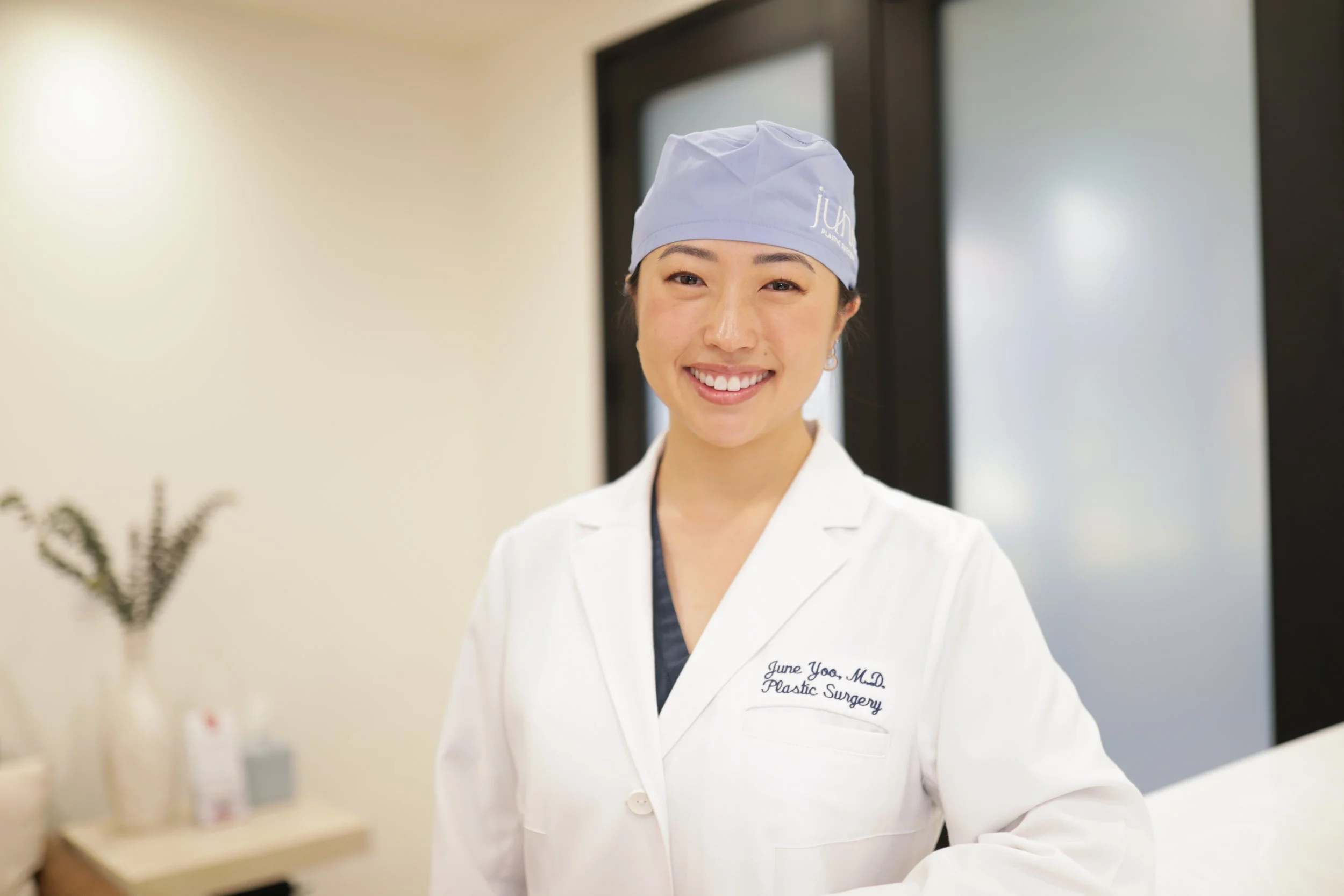
A breast that reflects who you are: lifted, reshaped, and proportional to you.
Dr. June Yoo brings surgical precision, artistic judgment, and honest communication to every mastopexy she performs. If you have been considering a breast lift, we invite you to schedule a consultation take the first step toward a result you will feel confident in for years to come.