

Eyelid Surgery (Blepharo-plasty)
Precision surgery for the upper and lower eyelids — tailored to your anatomy, your aging pattern, and your goals.
The eyes are one of the first features we see, and one of the first areas where the signs of aging become visible. Drooping upper eyelids, excess skin that hoods the lash line, and persistent puffiness or hollowing beneath the eyes can make you look tired, or less alert than you feel. Blepharoplasty, or eyelid surgery, is one of the most effective, reliable, and commonly performed procedures in plastic surgery, offering meaningful rejuvenation with a relatively straightforward recovery.
Dr. June Yoo approaches every blepharoplasty with a thorough understanding of eyelid anatomy and a commitment to outcomes that look refreshed and natural — never operated on. Whether you are addressing the upper eyelids, the lower eyelids, or both, your treatment plan will be designed specifically around your anatomy and what will serve you best in the long term.
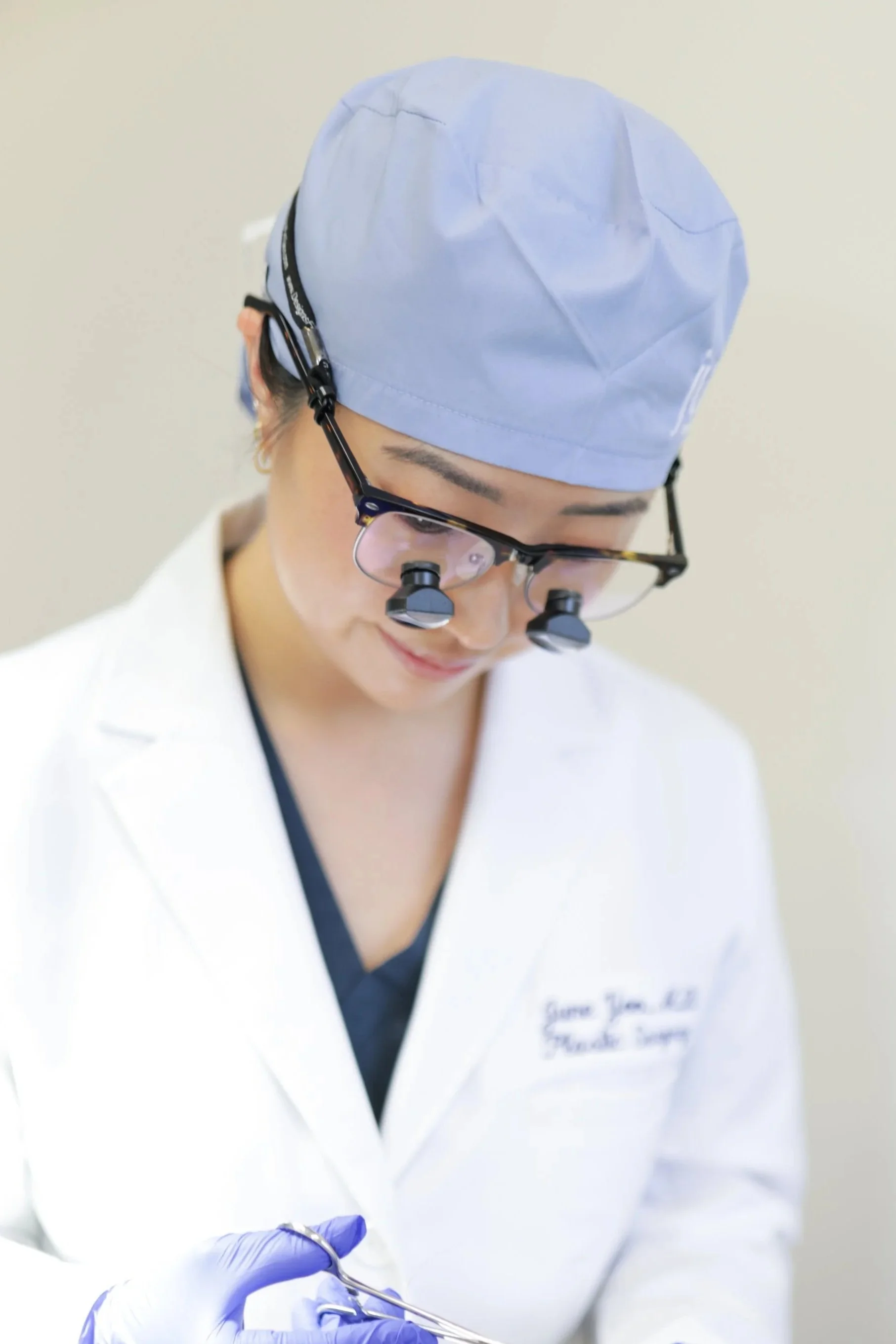
What is Blepharoplasty?
Blepharoplasty refers to the surgical rejuvenation of the upper eyelids, lower eyelids, or both. Depending on your anatomy and goals, it may involve the removal or repositioning of excess skin, muscle, and fat which restores a more open, rested, and youthful appearance to the peri-ocular area.
Upper and lower blepharoplasty address distinct concerns and are performed using different techniques. These procedures are usually combined in one surgery. In some patients, blepharoplasty is also combined with a brow lift or other facial procedures for a more comprehensive rejuvenation.
It is important to note that blepharoplasty is not a treatment for crow's feet, dark circles caused by pigmentation, or brow ptosis, all which require different or complementary approaches. A thorough evaluation by Dr. Yoo will ensure that the right procedure is recommended for you.

Upper Eyelid Blepharoplasty
-
With age, the skin of the upper eyelid loses elasticity and begins to descend. This excess skin can create a hooded appearance over the lash line, give the eyes a heavy or fatigued look, and in more advanced cases, actually impair the superior visual field. Upper blepharoplasty surgically removes this redundant skin and, when appropriate, a small amount of underlying orbicularis muscle as well as herniated orbital fat, restoring a cleaner, more open upper eyelid contour.
In some patients, a drooping upper eyelid is caused not by excess skin but by weakness of the levator muscle which is a condition called ptosis. If ptosis is identified during your evaluation, it is typically addressed at the same time
-
Upper blepharoplasty is both an aesthetic and — in qualifying cases — a functional procedure. When significant dermatochalasis or ptosis results in documented visual field obstruction, the procedure may be considered medically indicated. Dr. Yoo will evaluate your eyelid position, margin reflex distance, and visual field as part of your consultation and can help coordinate the appropriate documentation if functional surgery is being considered.
-
The incision for upper blepharoplasty is placed within the natural upper eyelid crease, where it heals in a well-concealed location. Precise measurements are taken preoperatively, preserving enough skin to allow complete eye closure, which is essential for corneal health and comfort.
Lower Eyelid Blepharoplasty
-
The lower eyelids age differently than the upper. Common concerns include:
Herniated orbital fat: creating visible bulging or "bags" beneath the eyes
Tear trough deformity: a hollowing or groove at the lid-cheek junction that casts a shadow and contributes to a fatigued appearance
Excess lower eyelid skin: laxity and fine wrinkling of the skin below the lash line
Lower eyelid laxity: looseness of the eyelid margin itself, which may need to be addressed to support the final result
Lower blepharoplasty is one of the most technically nuanced procedures in plastic surgery. The approach is chosen based on a careful assessment of your specific anatomy.
-
When the primary concern is herniated orbital fat without lower eyelid skin issues, the transconjunctival approach is preferred. The incision is placed on the inside of the lower eyelid, leaving no visible external scar. This technique is associated with a lower rate of lower eyelid malposition and ectropion compared to the traditional transcutaneous approach.
Fat may be conservatively excised or, more commonly, repositioned over the inferior orbital rim to soften the tear trough and restore a smooth lid-cheek transition. Fat repositioning produces a more natural, volume-preserving result than simple excision alone.
-
When excess lower eyelid skin is a significant concern, a transcutaneous (external skin) approach may be used, with the incision placed just beneath the lower lash line. This allows for skin removal in addition to fat management. When this approach is used, Dr. Yoo incorporates eyelid support techniques to preserve lower eyelid position and minimize the risk of scleral show or eyelid retraction, which are the primary risks associated with the transcutaneous technique.
-
Lower eyelid laxity is evaluated in every patient prior to lower blepharoplasty. Unaddressed laxity increases the risk of postoperative malposition. When present, it is typically corrected at the time of surgery through a canthal tightening procedure, which supports the eyelid margin and contributes to a more durable, well-supported result.
Am I a Good Candidate?
You may be a good candidate for blepharoplasty if you:
Have excess upper eyelid skin that hoods the lash line or impairs your visual field
Notice persistent heaviness or fatigue in your upper eyelid appearance that does not reflect how you feel
Have orbital fat herniation creating visible under-eye bags that are unresponsive to rest or skincare
Have a tear trough deformity contributing to a hollowed or shadowed under-eye appearance
Are in good overall health with no uncontrolled systemic conditions
Have realistic expectations for natural-looking improvement
Do not have significant untreated dry eye disease (this would require optimization before proceeding)

Recovery & Results
Upper Blepharoplasty: Most patients experience mild swelling and bruising for one to two weeks. The incision lines, which heal within the eyelid crease, are typically well-concealed and continue to fade over three to six months. Most patients are comfortable returning to light activity within one week, though strenuous exercise should be avoided for two to three weeks. Results are long-lasting, as many patients enjoy the outcome of their upper blepharoplasty for a decade or more, though the natural aging process continues over time.
Lower Blepharoplasty: Recovery from lower blepharoplasty tends to be slightly longer, with swelling and bruising resolving over two to three weeks. Patients who undergo fat repositioning may notice some firmness or fullness in the lower eyelid area as the repositioned tissue settles, but this typically resolves over several weeks to months. Final results are typically visible at three to six months and are long-lasting. As with all facial procedures, the aging process continues, and touch-up treatments may be desired in the future.
These procedures are performed on an outpatient basis either under local anesthesia or under general anesthesia, depending on patient preference and the scope of surgery.

Your consultation with Dr. Yoo
Blepharoplasty is a procedure where precision in planning is as important as precision in the operating room. At your consultation, Dr. Yoo will evaluate your eyelids in the context of your full periocular anatomy, and recommend the approach most likely to give you a natural, lasting result.
Key decisions you'll make together include:
Upper blepharoplasty, lower blepharoplasty, or both
Approach for the lower eyelid (transconjunctival vs. transcutaneous)
Fat management strategy (excision, repositioning, or conservation)
Whether adjunctive procedures are appropriate (brow lift, canthopexy, skin resurfacing)
Frequently Asked Questions
-
Yes, when planned and executed carefully, blepharoplasty results should look refreshed and rested. Dr. Yoo's approach prioritizes anatomic proportionality and volume preservation to avoid the overdone or hollowed appearance that can result from more aggressive techniques.
-
Upper blepharoplasty may be partially covered by insurance when there is documented visual field impairment caused by overhanging skin or true ptosis. This requires preoperative visual field testing and clinical photographs demonstrating the degree of obstruction. Dr. Yoo's team will assist with the appropriate documentation. Lower blepharoplasty is considered aesthetic and is not typically covered.
-
These procedures address different anatomic problems. Blepharoplasty removes excess eyelid skin and/or fat; a brow lift elevates a descended brow. In many patients, what appears to be excess upper eyelid skin is actually the result of brow ptosis, and a brow lift may produce a more appropriate correction than eyelid surgery alone. Dr. Yoo will evaluate both during your consultation to recommend the right approach.
-
Dark circles have several possible causes — including pigmentation, vascular visibility through thin skin, and shadowing from volume loss or a tear trough deformity. Blepharoplasty (specifically fat repositioning) can address shadow-based dark circles by softening the tear trough. Pigmentation-related dark circles are better addressed with skincare or laser treatments. Dr. Yoo will help identify the primary cause during your consultation.
-
Serious vision-threatening complications from blepharoplasty are rare. Retrobulbar hemorrhage is the most serious potential complication and occurs in fewer than 1 in 2,000 cases. Dr. Yoo takes every precaution to minimize risk, including careful hemostasis and post-operative monitoring. All risks will be reviewed in full during your consultation and informed consent process.
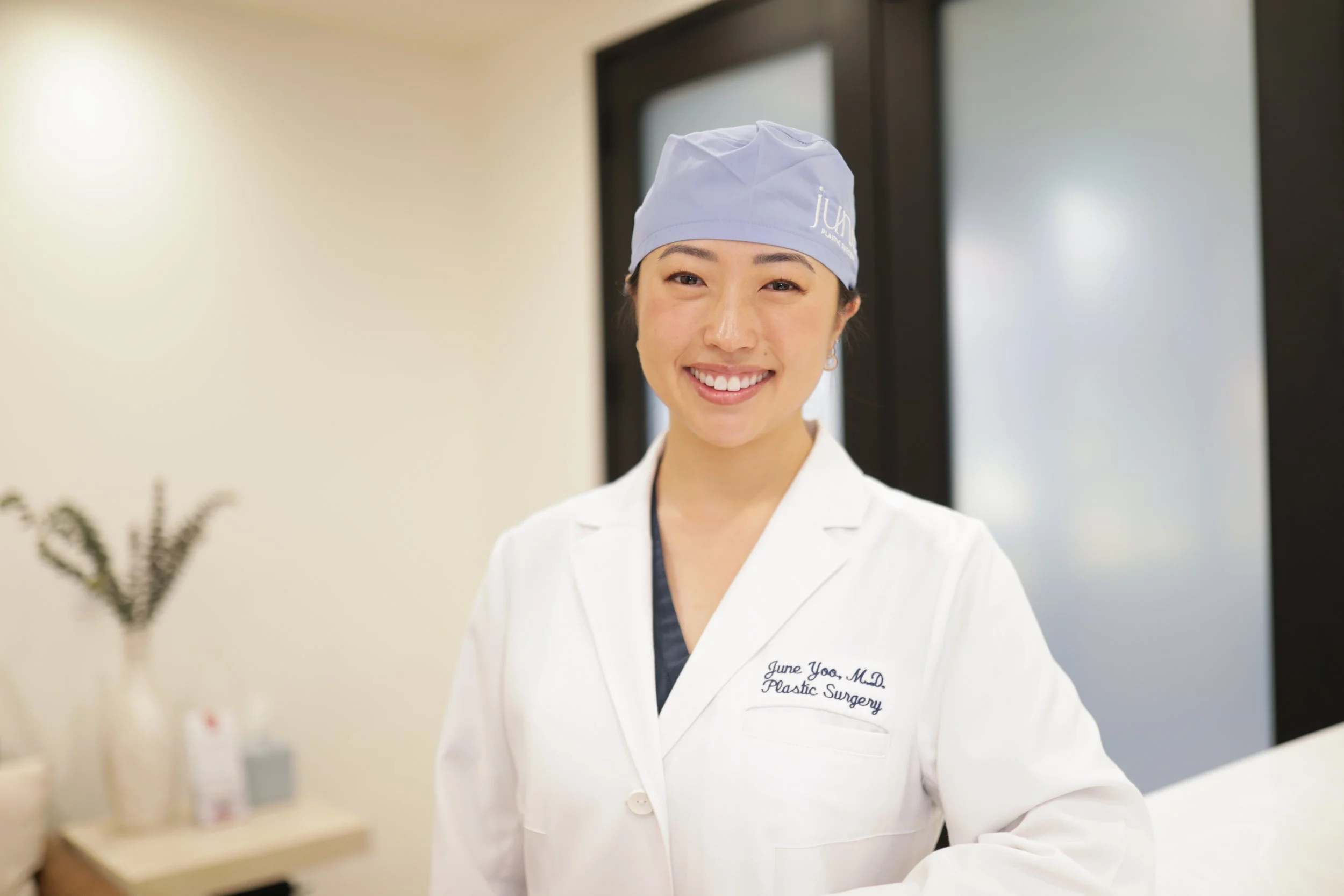
Eyes that reflect how you truly feel: rested, bright, and refreshed.
Dr. June Yoo brings a meticulous eye for anatomy and proportion to every blepharoplasty she performs. The difference between a good result and a great one is in the details. If you've been considering eyelid surgery, we invite you to schedule a consultation and take the first step toward a more open, youthful appearance.